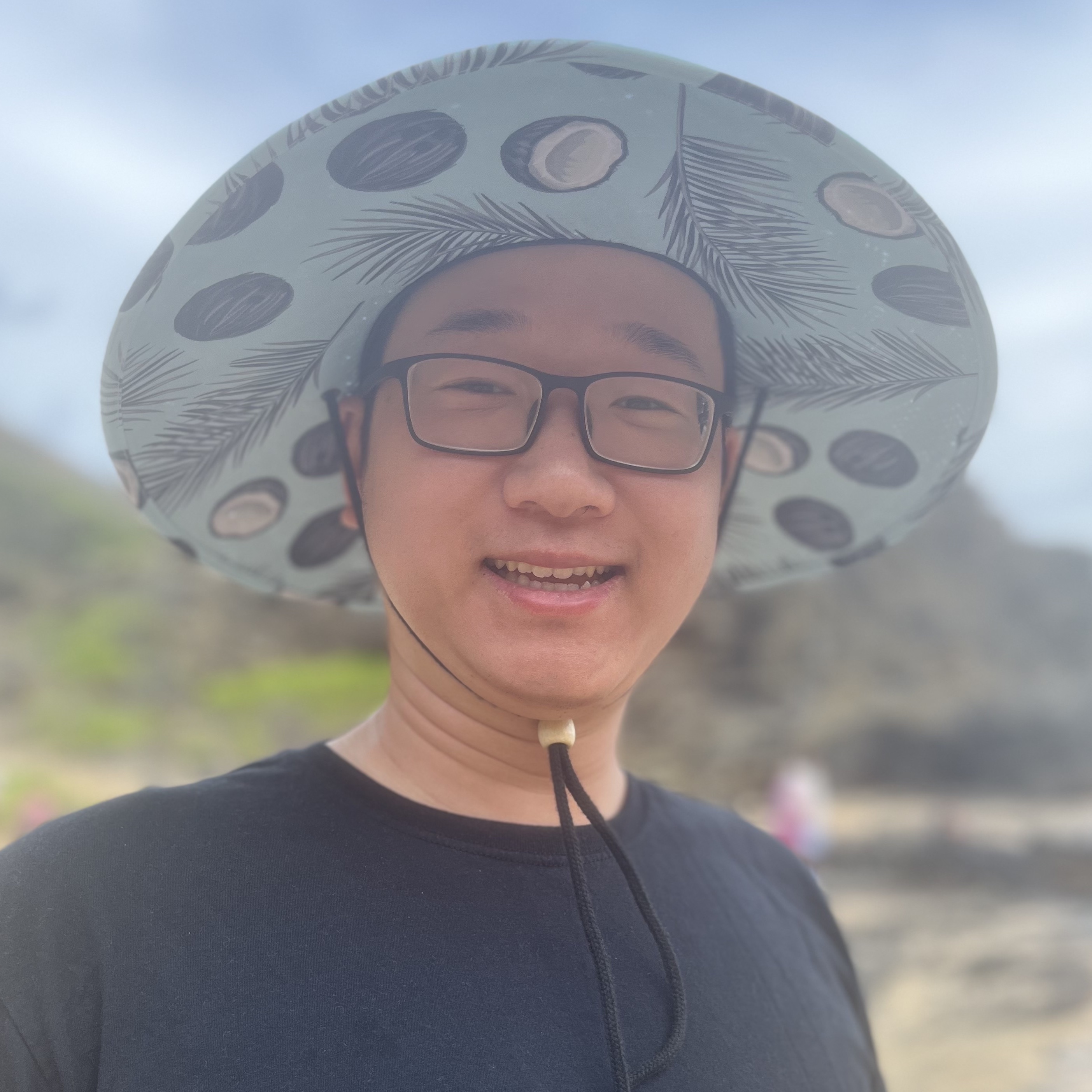
I am an Assistant Professor of Computer Science at Amherst College. I am also affiliated with Broadcom and the Manning College of Information and Computer Sciences at UMass Amherst.
AI is reshaping the future of software, but it also risks making our software more vulnerable. Addressing existing AI safety challenges is essential; at the same time, I believe AI presents a unique opportunity to make software systems SAFER and more capable than ever before. My research aims to advance both goals. Concretely, I am interested in developing core automated reasoning techniques to improve the trustworthiness of AI-enabled systems and designing protocols that combine inductive and logical reasoning to enable scalable automated reasoning.
I got my PhD at Stanford University in 2024, advised by Clark Barrett. Before that, I graduated with BS in Mathematics and Philosophy from Davidson College.
If you are an undergraduate or graduate student interested in working with me, please reach out!
Selected work:
AR for AI
- Evaluating Text-to-SQL Evaluation with Formal Verification [ICLR’26]
- Marabou 2.0: A Versatile Formal Analyzer of Neural Networks [CAV’24]
- Efficient Neural Network Analysis with Sum-of-Infeasibilities [TACAS’22]
- Scalable Verification of GNN-based Job Schedulers [OOPSLA’22]
AI for AR
- Tactix: Towards a Programmable Strategy Interface for Flexible SAT Solving [In submission]
- Cubing for Tuning [AAAI’26]
- Lemur: Integrating Large Language Models in Automated Program Verification [ICLR’24]
- Lightweight Online Learning for Sets of Related Problems in Automated Reasoning [FMCAD’23]
On Higher Education
In my opinion, at this moment of great uncertainty, a higher education grounded in the liberal arts is more valuable than ever. Our next generation urgently need to develop a sense of who they are and what they value, identify the skills to make a positive impact in society, and exercise independent judgment to make sense of an increasingly complex world. Whether at a research university or a liberal arts college, a liberal arts education—with its emphasis on close-knit intellectual communities, meaningful relationships with peers and faculty, critical thinking, and interdisciplinary learning—offers an ideal environment for this kind of intellectual and personal growth. At a time when the future of humanity feels increasingly precarious, liberal arts education remains one of the things that gives me hope. I hope we can continue to recognize and cherish the profound impact a scholar can make not only through scholarship, but also through educating.